
THE DECONSTRUCTION OF ITALIAN FOOTBALL
Alessandro Moroder
b. 1989, Los Angeles
THE DECONSTRUCTION OF ITALIAN FOOTBALL
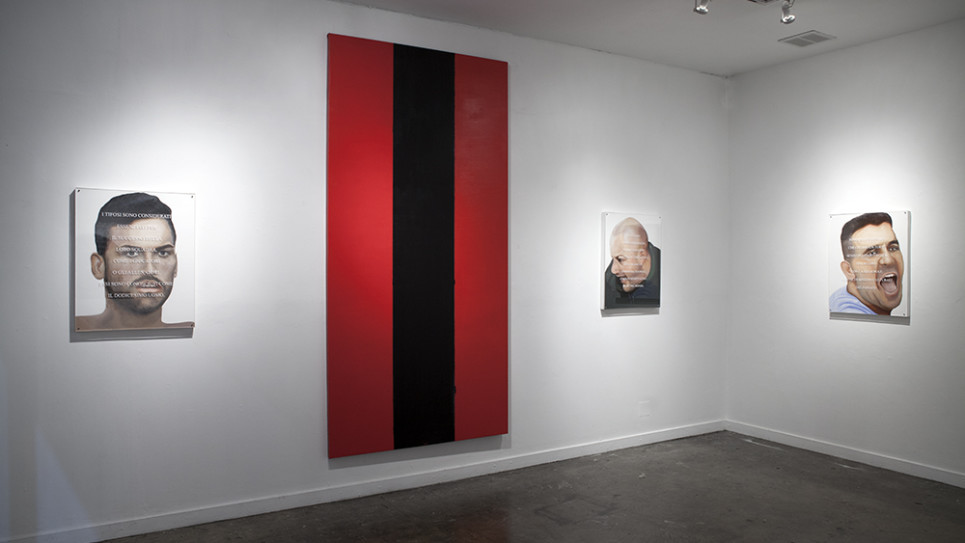
In his paintings and installations, Alessandro Moroder examines the masculine psyche through the notion of the spectacle by exploring it through various lenses, languages, and time periods. He uses his multilingual upbringing to guide certain aspects such as specific text, scale, or theme.
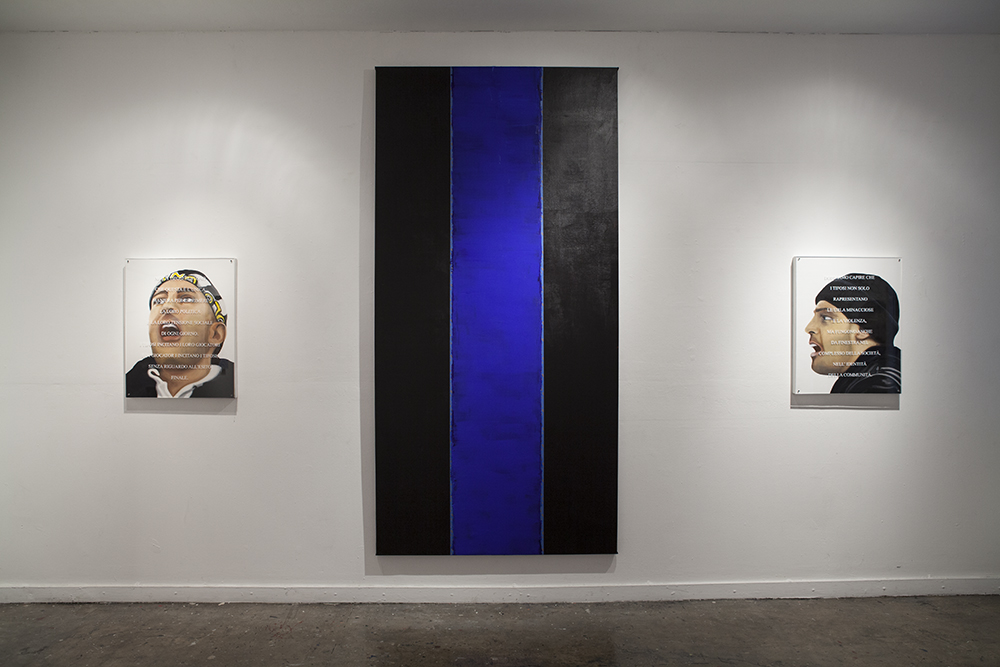
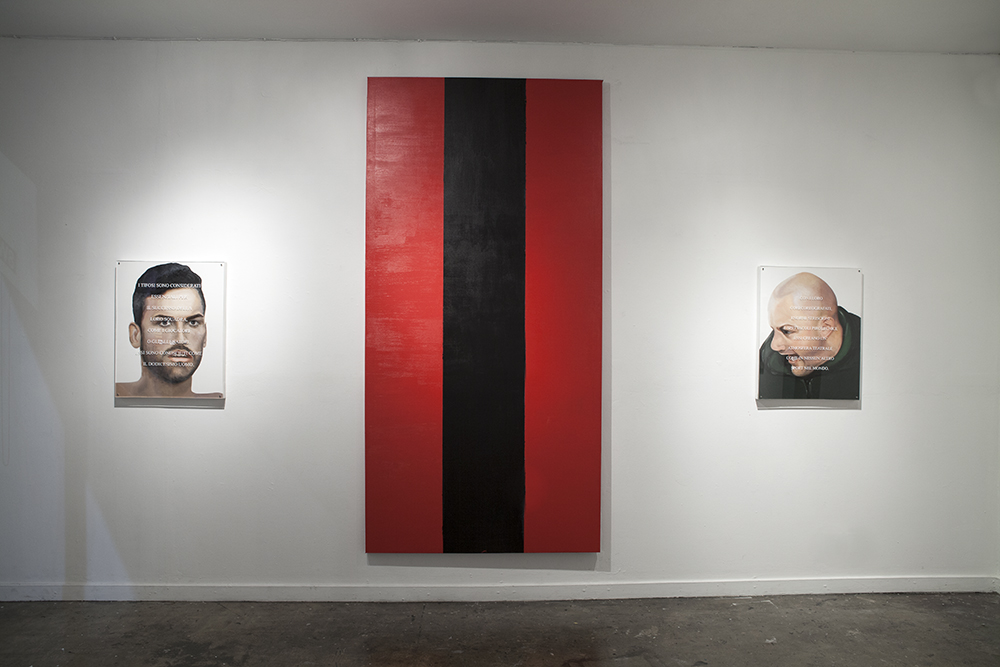
In The Deconstruction Of Italian Football, Moroder explores various traditions, symbols, and archetypes around what millions refer to as “The Beautiful Game”. From the cultural role of the loyal fans, the laws which regulate the behavior of those in and around the stadium, and iconic players’ impacts on shaping and cultivating the identity and vernacular of the city in which he plays for. Through paintings, video installation, and neon sculpture, he examines how certain elements of Italian football culture and its long standing traditions, passed down from generations, lends itself to the development of a personal taxonomy of the male identity, a cultural and social patrimony of the community to which they belong to.
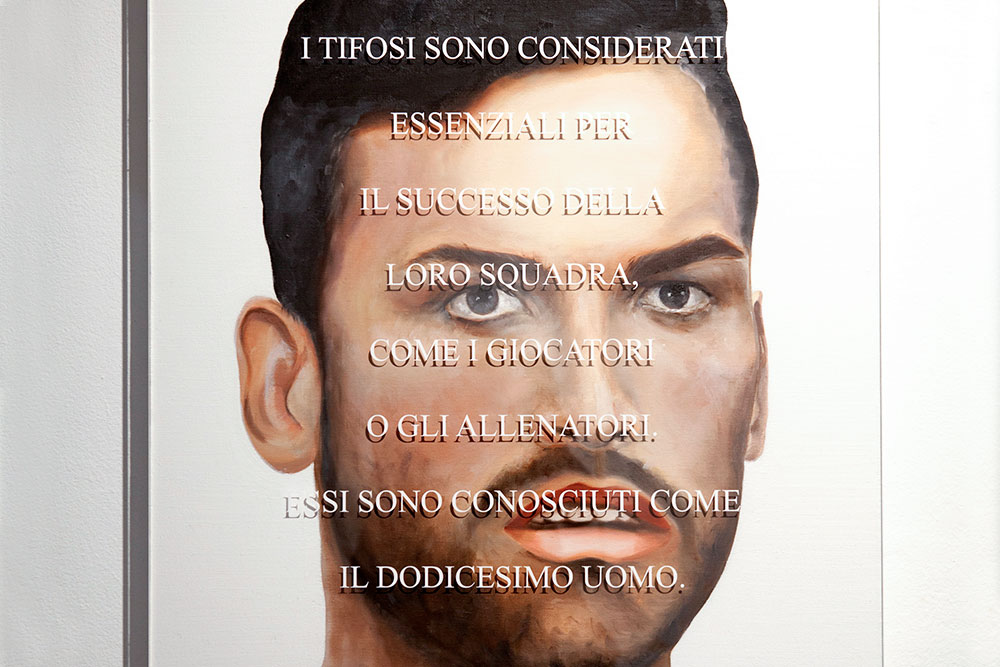
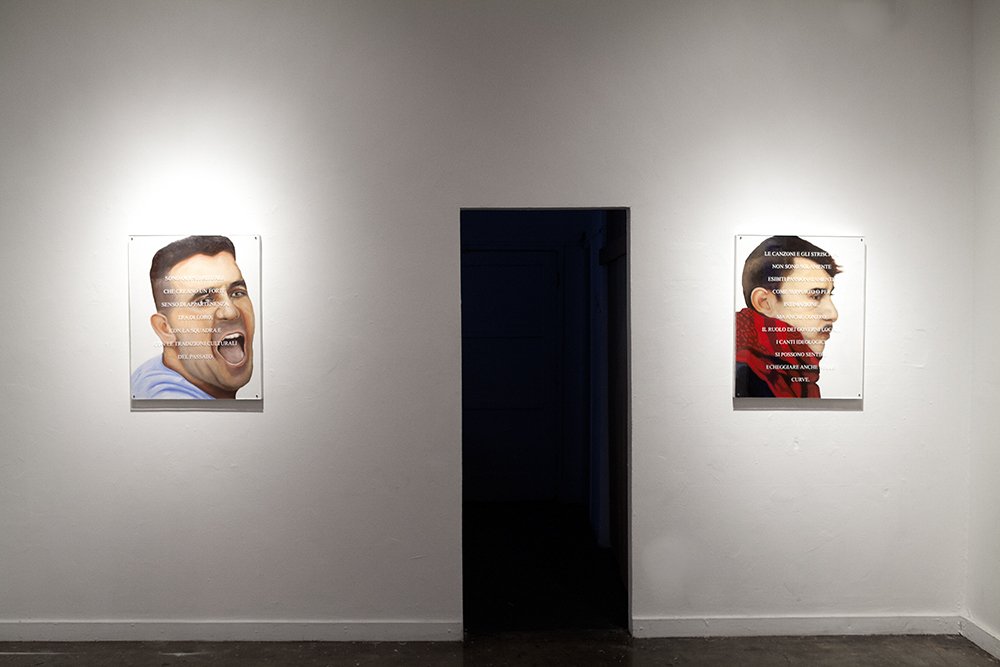
The tifosi, Italian for fans, are regarded to be just as vital to the success of the club as the players. They are known as the twelfth man, and through their choreographed chants, enormous and elaborate banners, pageantry, and pyrotechnics (Tifo choreography); an atmosphere and theatre is created unlike any other sporting event. It is these rituals that foster a strong sense of belonging to the group and the club.
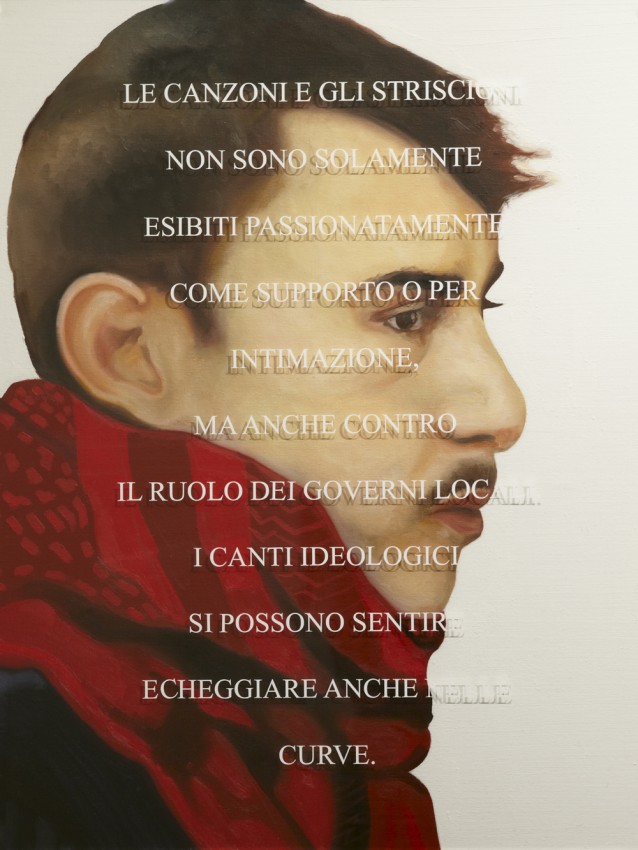
Songs and banners are not only passionately displayed for support of their favorite players or the teams they hate, topics of socio-economics, role of local government, and ideology are some of the many themes that can be heard echoing the curvas (seating behind each goal). Many fans feel this is their only true way of expressing everyday political and social tensions. Fans cheer on the players, and players cheer on their fans, always thanking them at the beginning and end of matches, regardless of the outcome.
Ultras make it almost their civic duty as a representative of the city and club to travel to each away match throughout Europe to help encourage their side and intimidate opposing players and supporters. As matters can sometime become violent, fans are escorted by police when entering and leaving rival stadiums. We must understand that ultras represent more than mindless violence, but rather, serve as windows into the complexion of society.
For many fans, both casual observers and Ultras, the comradery of their fellow brother, the emotion of the game, the implications of its outcome, along with the cultural traditions and it’s significance of their pasts, creates a sense of belonging in the theatre of spectacle, masculinity, and mystic.
Alessandro Moroder – Price List 03.08.13


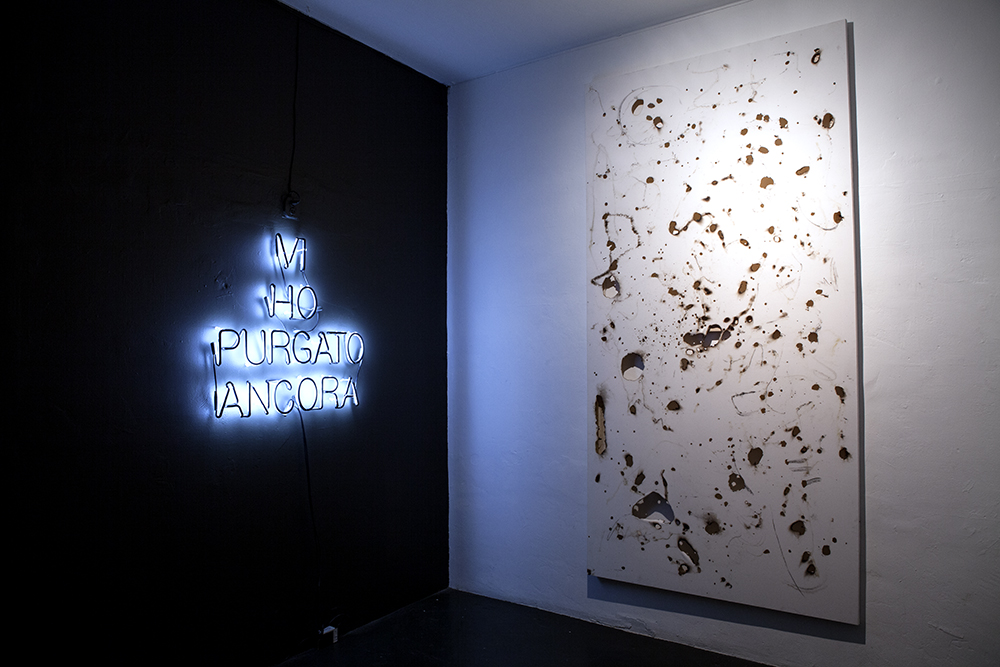
Film of Alessandro Moroder working on his ‘Flare Painting’ behind HVW8. Original score by Photocall.